
Understanding IP protection ratings for connectors
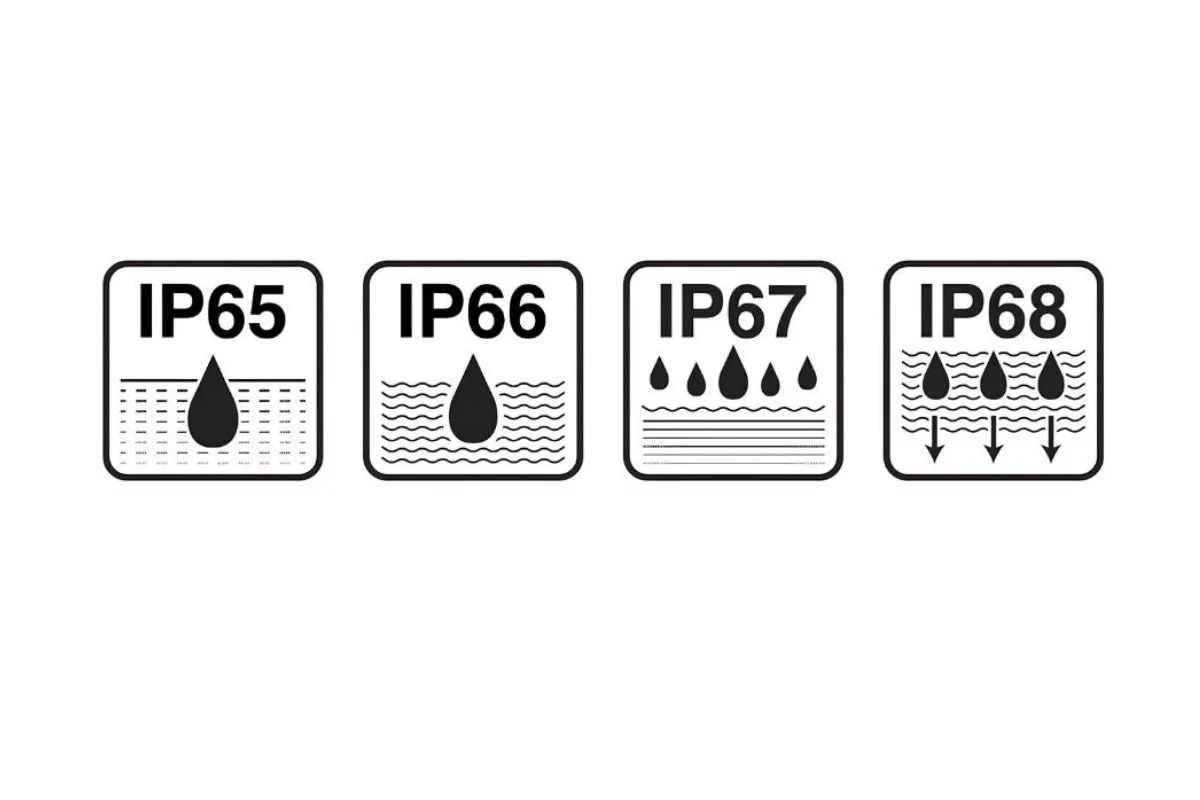
When selecting a connector, the IP rating is often one of the most important factors. Yet there are still many misconceptions about the different IP classifications. Is IP67 always better than IP66? When do you need IP68? And is IP69K really necessary for your application?
In this article, we explain what the different IP ratings mean and help you choose the right connector for your application.
What is an IP rating?
IP stands for Ingress Protection and indicates the level of protection an enclosure provides against the ingress of dust and water. The classification is defined by the international IEC 60529 standard.
An IP code consists of two digits:
- First digit: protection against solid particles such as dust.
- Second digit: protection against water.
For connectors, the most common protection ratings are IP66, IP67, IP68 and IP69K.
The first IP digit: protection against dust
| First digit | Protection |
|---|---|
| 5 | Dust protected. Limited dust ingress is permitted without affecting operation. |
| 6 | Dust-tight. No dust can enter the enclosure. |
Today, almost all industrial connectors designed for outdoor use feature an IP6X rating and are therefore completely dust-tight.
The second IP digit: protection against water
IP66 – Protection against powerful water jets
An IP66-rated connector is protected against powerful water jets from any direction. Rain, splashing water and intensive cleaning are no problem.
Typical applications:
- Outdoor lighting
- Industrial installations
- Electrical cabinets
- Machinery and equipment
IP67 – Protection against temporary immersion
In addition to protection against powerful water jets, an IP67 connector can withstand temporary immersion in water up to 1 metre for a maximum of 30 minutes.
This is one of the most common protection ratings for applications that may occasionally be submerged.
Typical applications:
- Garden and park lighting
- E-mobility
- Sensors
- Industrial automation
IP68 – Protection against continuous immersion
An IP68 connector is suitable for continuous immersion in water. The exact immersion depth and duration are specified and tested by the manufacturer.
As a result, IP68 offers additional confidence in applications where permanent exposure to water or moisture is possible.
Typical applications:
- Underground installations
- Fountains
- Marine applications
- Wet industrial environments
IP69K – Maximum protection during high-pressure cleaning
IP69K was developed for applications that are regularly cleaned using high-pressure and high-temperature water jets.
The connector is tested with high-pressure, high-temperature water sprayed from multiple angles.
Typical applications:
- Food processing
- Pharmaceutical industry
- Agricultural machinery
- Commercial vehicles
- Industrial cleaning equipment
Overview of common IP ratings
| IP rating | Dust-tight | Water jets | Temporary immersion | Continuous immersion | High-pressure cleaning |
| IP66 | ✓ | ✓ | – | – | – |
| IP67 | ✓ | ✓ | ✓ | – | – |
| IP68 | ✓ | ✓ | ✓ | ✓ | – |
| IP69K | ✓ | ✓ | ✓* | Depending on design | ✓ |
*IP69K itself does not test for continuous immersion. For this reason, some connectors combine multiple protection ratings, such as IP68/IP69K, allowing them to withstand both prolonged immersion and high-pressure washdown.
Which IP rating should you choose?
The highest IP rating is not automatically the best choice. Higher protection levels often require more advanced sealing systems, more complex designs and higher costs.
Ask yourself the following questions:
- Will the connector be installed outdoors?
- Can it be temporarily submerged?
- Is continuous immersion possible?
- Will the installation be cleaned with a high-pressure washer?
- Is dust a significant environmental factor?
By analysing the actual operating conditions, you can select a connector that provides the right level of protection without paying for unnecessary specifications.
More than just the IP rating
Although the IP rating is important, it is only one aspect of connector reliability.
You should also consider:
- UV resistance
- Operating temperature range
- Chemical resistance
- Mechanical loads and vibration
- Impact resistance (IK rating)
- Number of mating cycles
- Seal material
For example, an IP68 connector is not automatically a better choice than an IP67 connector if the application is primarily exposed to vibration or aggressive cleaning chemicals.
A&C Solutions helps you select the right connector
Every application places different demands on a connector. That is why our technical experts look beyond the IP rating alone.
We advise you based on your complete operating environment, ensuring you choose a connector solution that delivers reliable performance, is easy to install and continues to perform for many years.
Whether you are looking for a connector for industrial automation, outdoor lighting, e-mobility or any other demanding application, A&C Solutions helps you make the right choice.
Not sure which IP rating your application requires? Contact our technical experts for tailored advice.